KOPERO

- Solid copper
- Wide, rounded grips
- 99.21% pure copper measured
- Velvet pouch included
Spend €100,00 more for free shipping
Shop with confidence 30-day money-back guarantee
Delivery Order before 11:30 pm for the next dispatch.


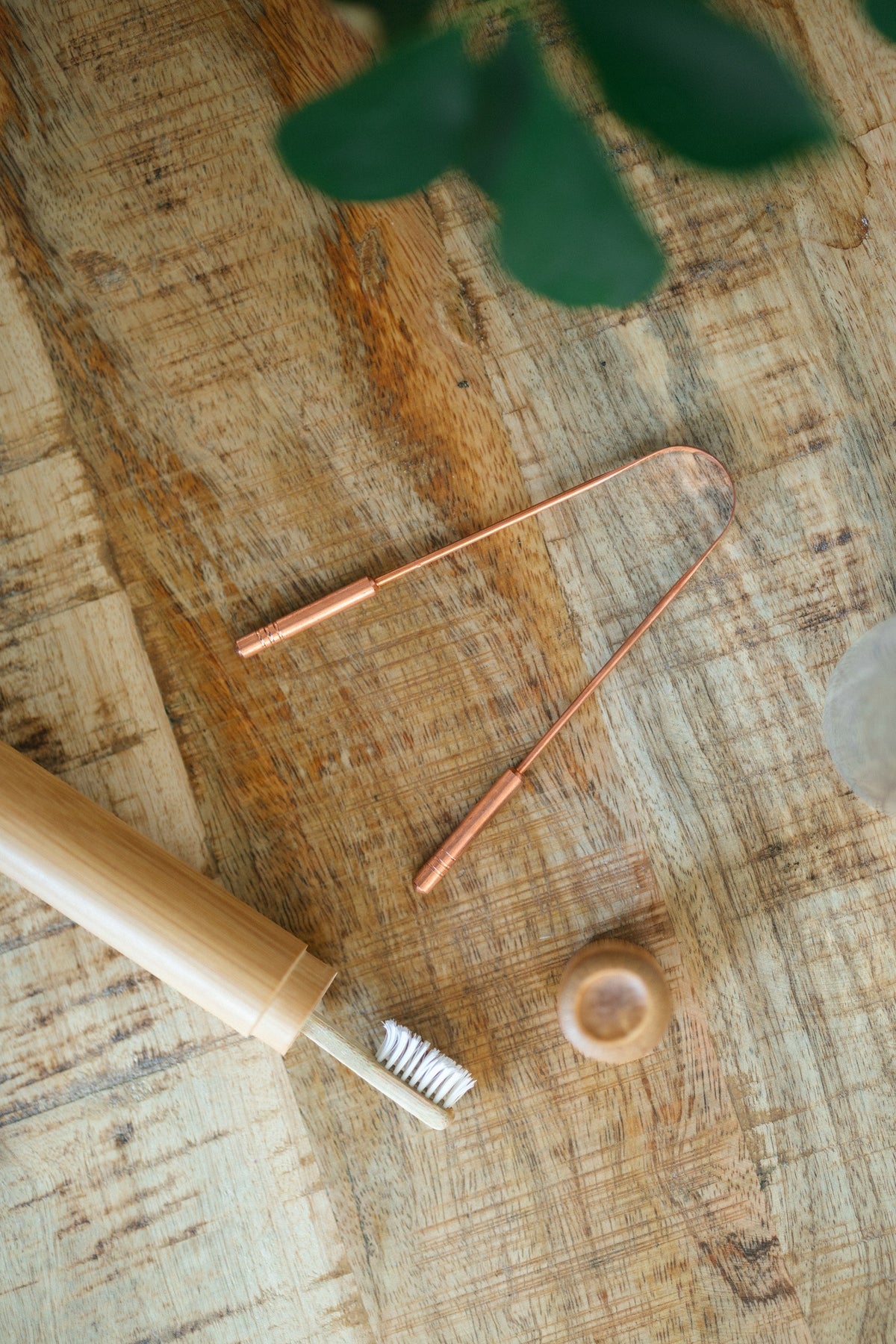
A simple material, curved to the classic shape with no sharp edge.
Tongue cleaning is a fixed part of the morning routine in Ayurveda, already described in the classical Charaka Samhita.
In studies, a tongue scraper removed 75 % of the sulphur compounds that contribute to less fresh breath, compared to 45 % with a toothbrush.
Like a toothbrush, you use the scraper only yourself, never shared with others.
Solid copper changes colour a little on its own over time. That's completely normal, and even a sign of pure copper. When the shine fades and you want it back, polish the scraping part with lemon and salt (salt crystals can be mildly abrasive, so let the salt dissolve completely in the lemon juice before polishing). Exactly how is in the care guide.


This copper tongue scraper is made of solid copper. The composition of our copper has been independently analysed by RTC Laboratory and URS Products and Testing.
RTC Laboratory · 2021
Composition independently measured by RTC Laboratory and checked again by URS.
Two independent material analyses: 99.21% copper at RTC in 2021 and 99.18% at URS in 2026.
A solid copper tongue scraper. The uncoated scraping section touches your tongue directly, with no lacquer or plastic layer in between.
Our copper has been independently tested for composition and food contact.
Overall migration, odour and taste (LFGB), and 19 heavy metals.
URS reports “PASS” for the described tests. 19 metals examined: not detected in the test water.
URS/LAB/02/RID/26-27/2103EC 1935/2004 · REACH · EU 10/2011 as a referenceDistilled water · 2 hours at 40 °C · 3 repetitions.This product is made from solid copper. Pure copper doesn’t attract a magnet. In the video, the magnet sticks only to the metal test piece.
The simple curved shape combines a grip, a gentle working edge and solid copper in one everyday tool.

The scraper is handmade in India from solid copper.
The classic curve allows a smooth motion from back to front, with no sharp edge.
The ribbed ends help distribute pressure evenly while scraping.
The curved shape matches the classic Ayurvedic description of daily tongue cleaning, often as the first step of the morning routine.
The tongue scraper comes in an elegant velvet pouch, together with a scannable guide.
You unpack a luxury black branded box. So you can give it away straight from the box, without wrapping anything around it.
A Kopero card is inside the box. The QR code on it takes you to the digital manual.
The tongue scraper is a small curved instrument you draw across your tongue in the morning, before you eat, drink or brush your teeth. That is when the coating is still there. The shape does the work. You hold it at both ends, place it as far back as feels comfortable and pull it forward in one steady stroke, three to five times. The curve follows the width of your tongue and the edges are rounded, exactly as the Charaka Samhita prescribed: curved and not sharp.
For the movement itself the material matters little; after that, copper and stainless steel part ways. Copper is naturally antibacterial, and it is the metal the classical text names outright; stainless steel did not yet exist. Light pressure is enough. Stop if you feel pain or irritation or have any sores, and do not use the scraper on a damaged or inflamed tongue.
Copper develops its own patina with use. You can let it grow or polish the shine back.
Clean the scraping part after use and dry it. Start with a soft cloth. Only polish when the shine fades. A personal patina is part of copper; let it develop or polish the shine back.
A small daily moment, just before you brush your teeth.

Before first use, rinse the scraping part with warm water and dry thoroughly. Only polish the scraping part when the shine starts to fade and you want to restore it.

Scrape before you eat, drink or brush your teeth: the coating is still there then.

Hold it by both ends and place it as far back as is comfortable, no further.

Pull it forward three to five times, rinsing the scraper in between. Then rinse your mouth.

Light pressure is enough. Stop if it hurts, irritates or causes sores; do not use it on a damaged tongue.

Rinse under warm water, dry and keep it in the velvet pouch. Only polish the scraping part when the shine starts to fade and you want to restore it. Use lemon and salt (salt crystals can be mildly abrasive, so let the salt dissolve completely in the lemon juice before polishing). Rinse thoroughly and dry straight away. Prefer a patina? You can let it develop.
The full guide comes with your product: scan the QR card in the packaging.
The first thing in your morning
The classic curve, in the copper the Charaka Samhita names
Handmade from solid copper
Two ribbed handles, control with both hands
That is all the time it takes
Velvet pouch for storing and carrying
Polish it back, and melting copper down costs it nothing
The curved scraper removes the coating on your tongue that a toothbrush does not always reach well. Tongue scraping can also reduce the sulphur compounds that contribute to bad breath.
Copper has natural antibacterial properties, measured in laboratory research on copper surfaces. That makes it a distinctive material for daily tongue cleaning. Rinse the scraper after use and let it dry.
Tongue cleaning has been part of the Ayurvedic morning routine for centuries. Copper is explicitly named in classical texts: a few gentle strokes before eating or drinking give your mouth a fresh start.

A piece of curved copper, nothing else. The design has stayed the same for centuries because it's worked for centuries, and it's changed very little in all that time.

The tongue scraper belongs to the same morning ritual as your toothbrush: scrape first, then brush. Rinse it after use and let it dry.
Unpack it at your own pace, feel the weight and see whether the size suits you. If it is not for you, send it back within thirty days and get your money back. If you use it for longer than you need to judge it, we may deduct for loss of value. You arrange the return yourself with whichever carrier suits you best, or you ask us for a return label. The cost of sending it back is yours.
Translated from the original language where needed.
A lovely product with a nice pouch

Good quality tongue scraper!

A lovely ritual every morning. Happy with it

I scrape my tongue every morning. Feels fresh

Handy

A lovely product

Comes with a handy storage pouch

First thing in the morning, before you eat, drink or brush your teeth. That way, the coating that builds up on the tongue overnight is still there, and you remove it before it spreads further through the mouth.
It shouldn't be painful. Place the scraper as far back as feels comfortable, pull it forward in one smooth stroke with light pressure, and repeat three to five times. Stop if you feel pain, irritation or small nicks, and don't use the scraper on an injured or inflamed tongue.
No, only use the scraper yourself. Just like a toothbrush, it's a personal care item.
Jihva Prakshalana is the Ayurvedic term for tongue cleaning, already described in the Charaka Samhita as a fixed part of the morning routine alongside cleaning teeth and oil pulling. This classical text mentions scrapers made from gold, silver and copper among others, with the only requirement being that they're curved and not sharp. In modern research, a tongue scraper removed 75% of the sulphur compounds that contribute to less fresh breath, compared to 45% with a toothbrush.
Rinse it under warm water after every use, dry it thoroughly, and store it dry in the velvet pouch. Polish it with lemon and salt (salt crystals can be mildly abrasive, so let the salt dissolve completely in the lemon juice before polishing) every now and then if you want the shine back: discolouration on solid copper is completely normal. Step by step instructions are in the included guide.


